Service Design:
Waymate
Project Type
Team Project
Duration
8 Weeks
My Role
User Research | UX/UI Design | Design System | Prototyping | Usability Test
Tools
FigJam | Figma | Protopie

Project Overview
Waymate:
Reframing the Airport Arrival Experience
This project reframes the travel experience by targeting the most stressful moment of a trip: the airport-to-city arrival. Our research showed that cognitive overload and unfamiliarity heighten anxiety at this stage. This led us to design a guided ride-sharing solution that reduces decision-making pressure and transforms the arrival moment into a clearer, more reassuring start to the journey.
Ride-Sharing: Affordable, Stress-Free Airport Transfers
Waymate pre-matches travellers heading in a similar direction, enabling them to share fares at a fair price. Users can review profiles, select co-passengers, and coordinate pick-up in advance, reducing uncertainty from the moment they arrive.



Airport Pickup: Transparent and Predictable
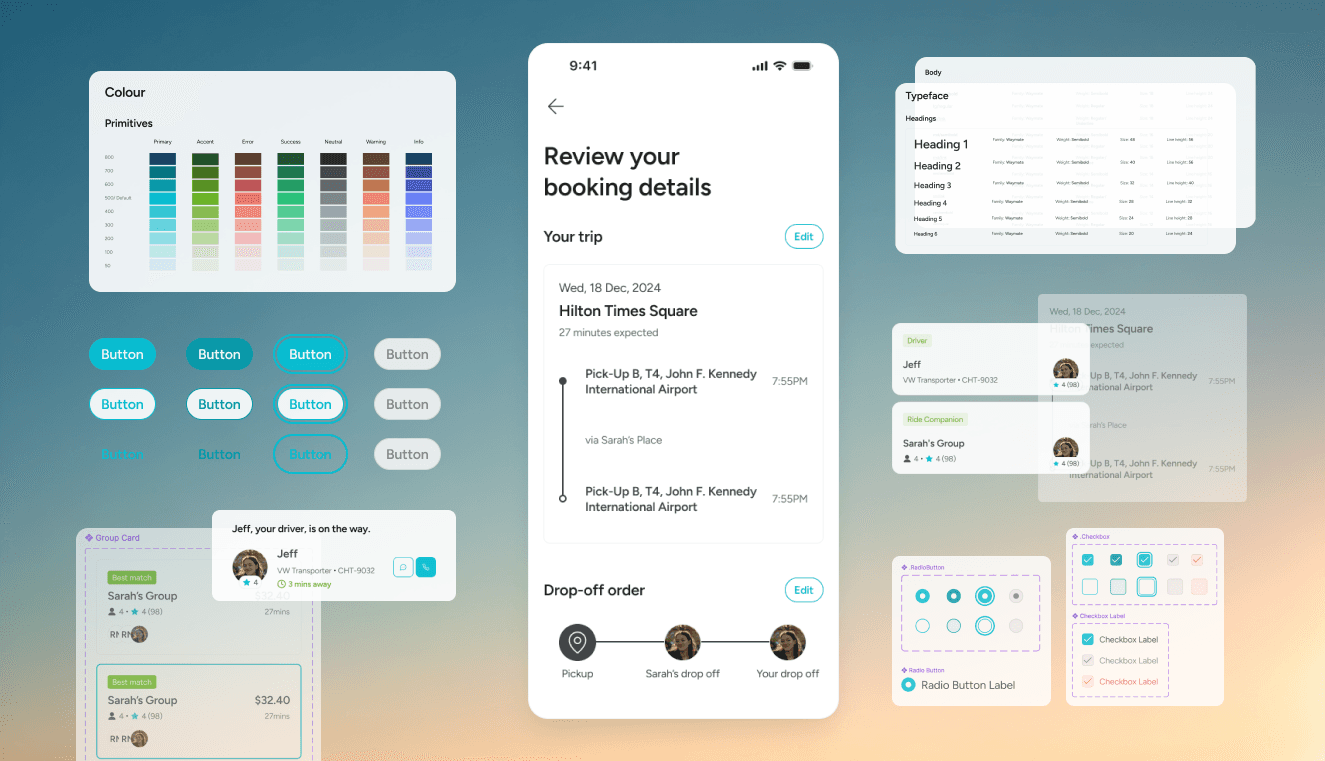
We designed a pickup system that visualises the full sequence of pick-ups and drop-offs based on each traveller’s location. This allows users to see their order, route, and expected timing in advance, reducing uncertainty and providing reassurance after landing.

Flight-Synced Booking: Smooth Travel Despite Delays
Waymate syncs with flight details in real time. If a flight is delayed or rescheduled, bookings are automatically adjusted and rides reassigned, ensuring travellers have a reliable pick-up at the correct time.
Discover
How do travellers perceive the
airport transfer experience?
Secondary Research
Understanding Shifts in Traveler Behavior
We began with secondary research to understand the broader context of airport transportation—its current state and future outlook. Findings showed that travel behaviours are diversifying, driven by low-cost airlines and ride-hailing services. This revealed the need for more segmented, tailored solutions that address the varied needs of different traveller groups.
Insight 01
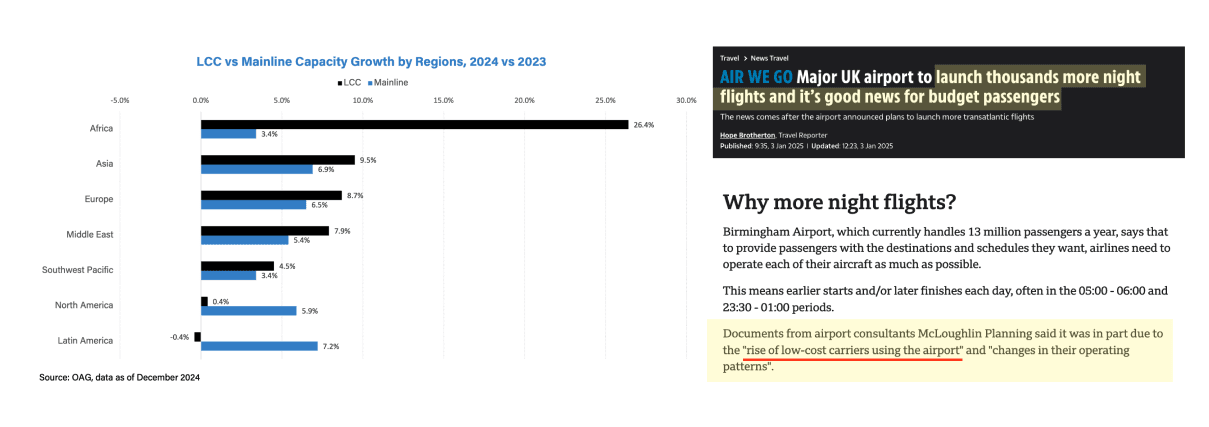
Growth of Low-Cost Airlines (LCC) and Changes in Airport Usage Patterns
As more people use low-cost airlines (LCCs), their growth is significantly influencing airport usage patterns. To cut costs, LCCs primarily operate at secondary airports and focus on maximizing flight utilization, often scheduling flights at night or early in the morning. This trend increases the demand for more flexible airport transportation services.
Insight 02
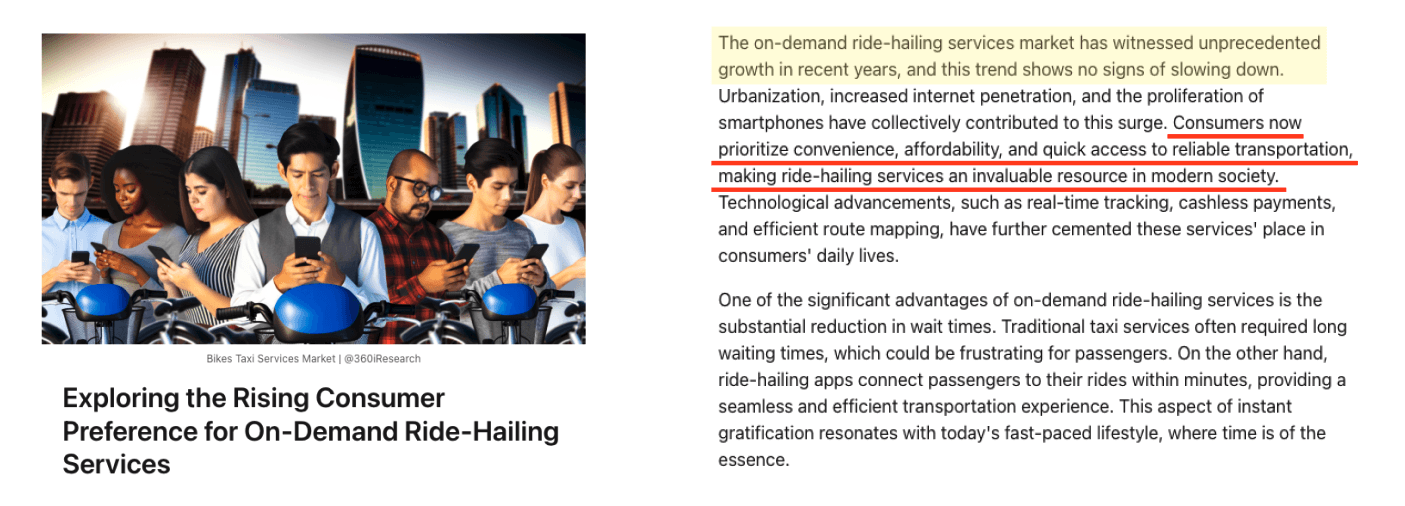
Increasing Preference for Ride-Hailing Services
Globally, ride-hailing services like Uber and Lyft are becoming more popular, especially for airport transportation. Demand is even higher at night or in areas with limited public transport options. Key factors driving this preference include predictable fares, convenient booking systems, and a variety of vehicle choices.
Market Analysis
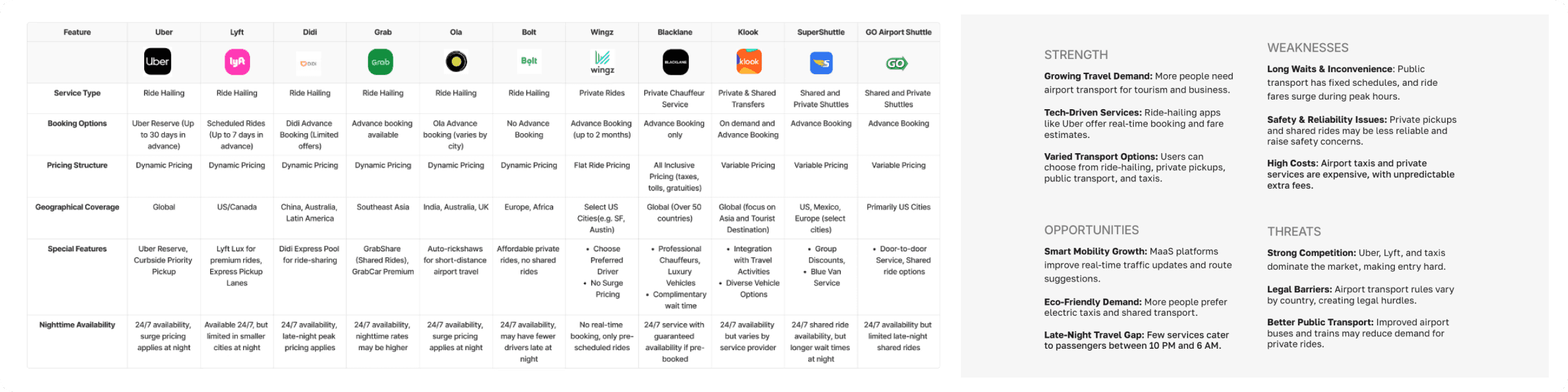
Evaluating the Airport Transportation Market
Through market analysis, we identified strong and growing demand in the airport transportation sector. Established ride-hailing services such as Uber and Lyft continue to develop tailored offerings for airport travel, highlighting the significance of this market. At the same time, gaps remain: high costs for private rides, limited late-night public transport, and persistent traveller discomfort. These insights revealed clear opportunities to design a service that addresses unmet needs and reduces friction in the airport transfer experience.
User Survey
Understanding the Obstacles in a Traveler’s Path
We conducted research to understand how users plan their journey from the airport to their final destination and what their experience looks like. We surveyed 34 travelers in their 20s and 30s. The 18-question survey revealed key decision factors and common pain points in choosing transportation.
Insight 01
70.6% of users mainly use public transportation for airport travel.
70.6%
Public transportation
(Bus/Metro)
14.7%
Airport limousine/
Shuttle
8.8%
Modes of transportation used for airport travel during international trips
Taxi
Insight 02
55.9% of users consider convenience the most when choosing airport transportation.
55.9%
32.4%
11.8%
Criteria for selecting airport transportation
Convenience
Travel time
Cost
Insight 03
58.8% of users have experienced difficulty finding airport transportation.
58.8%
41.2%
Experience with difficulty in finding airport transportation
Yes
No
Insight 04
62.5% of users struggled to find airport transportation due to arriving at inconvenient times or long travel times.
62.5%
62.5%
37.5%
Challenges in Finding Airport Transportation
Arrived too early or too late
Long travel time
Uncertainty about the transportation options
The survey revealed that travelers face obstacles in airport transportaiton due to a lack of convenient options, difficulty finding transportaion at certain times, and long travel times.
In-Depth Interview
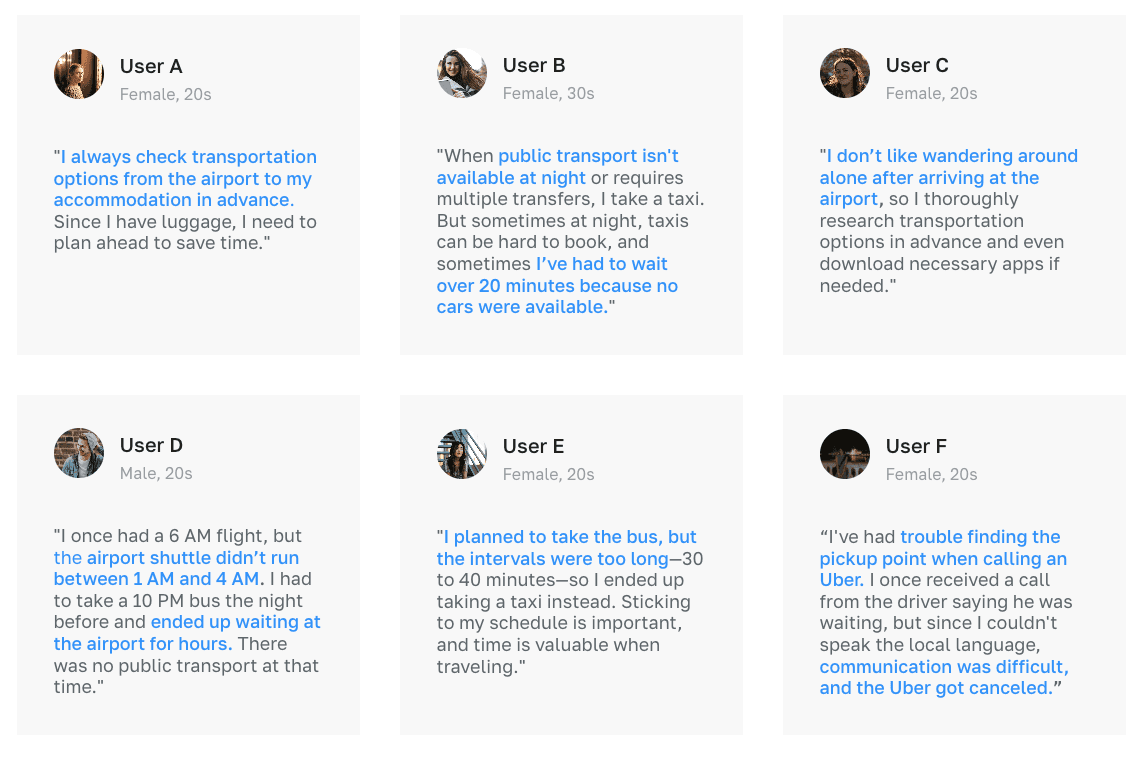
Delving Deeper into Travelers’ Challenges
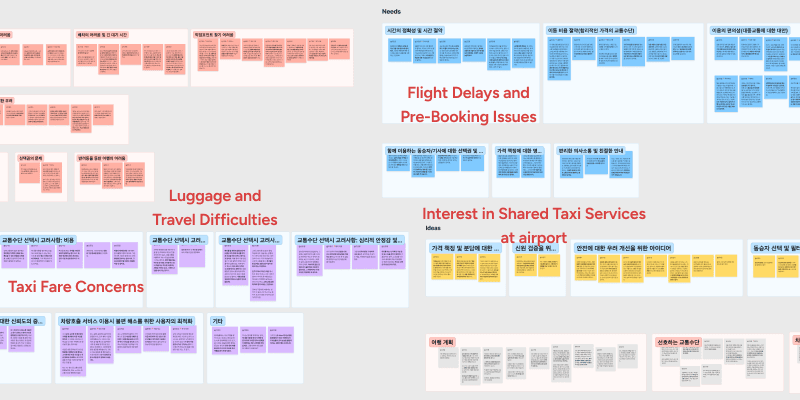
We interviewed users to uncover pain points in finding and using airport transport. Then, using affinity mapping, we identified shared issues—like waiting, luggage, and schedule change stress—while also seeing how each user experienced them differently. These insights helped us define the problem more clearly.
Define
What is the most significant difficulty travelers face during airport transfers?
Problem Statement
Defining the Main Challenges
We identified key challenges based on users' motivations, goals, needs, and pain points uncovered through our research.
Problem 01
Travellers feel anxious during airport transfers due to time pressure and unfamiliar environments.
Problem 02
Existing mobility services lack clear coordination and state visibility, increasing uncertainty and hesitation.
Develop
How might we reduce perceived uncertainty and increase users’ sense of control during airport transfers?
User Story Mapping
Mapping User Journey
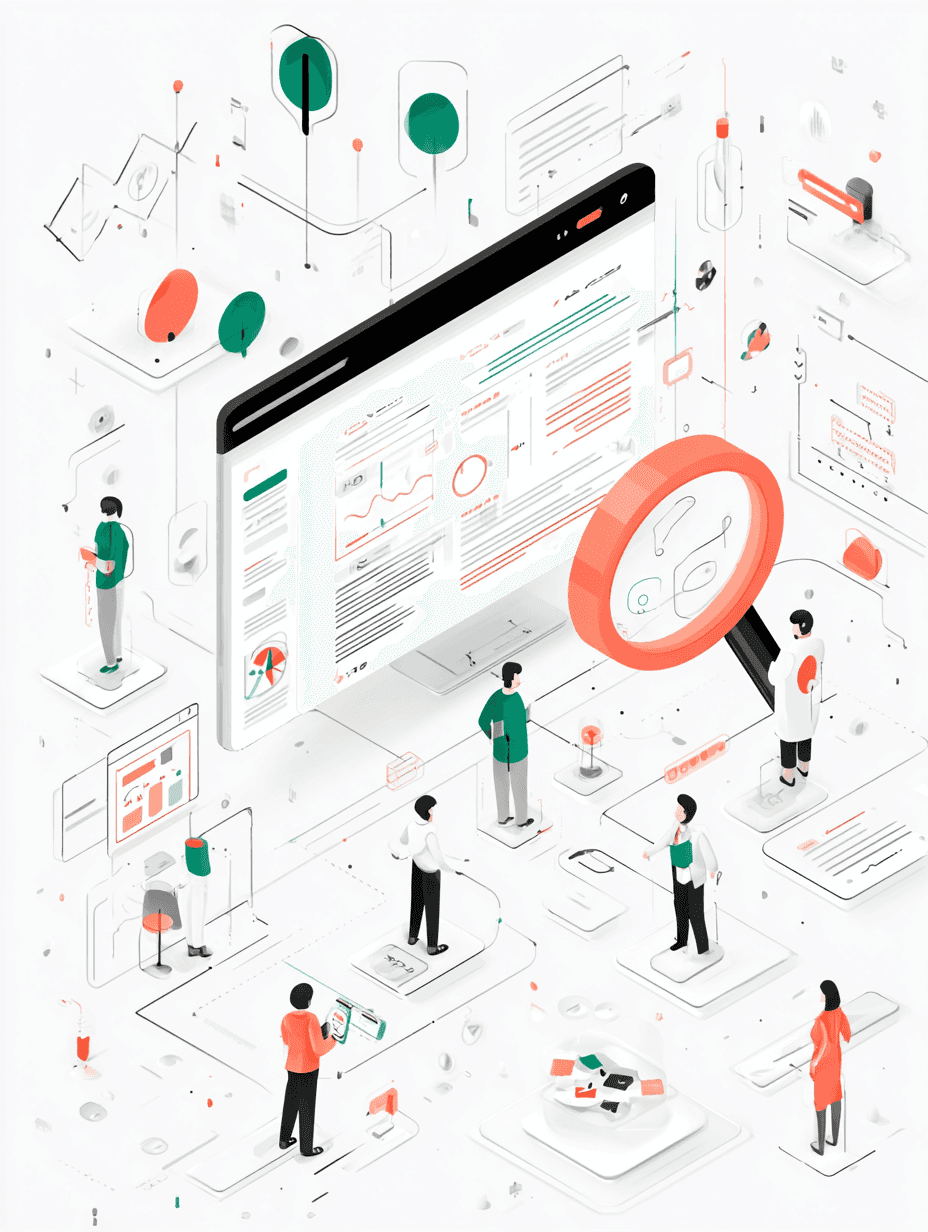
Once that direction was clear, we translated it into structure. We mapped the full end-to-end journey and identified the moments where emotional tension and cognitive load were highest.
Minimum Viable Product
Defining the MVP
Then, we defined our MVP using user story mapping. We broke down the journey—from booking to drop-off—into key stages to identify essential actions and features for MVP1 and MVP2.
Clarity

Predictability
Trust-building
Information Architecture
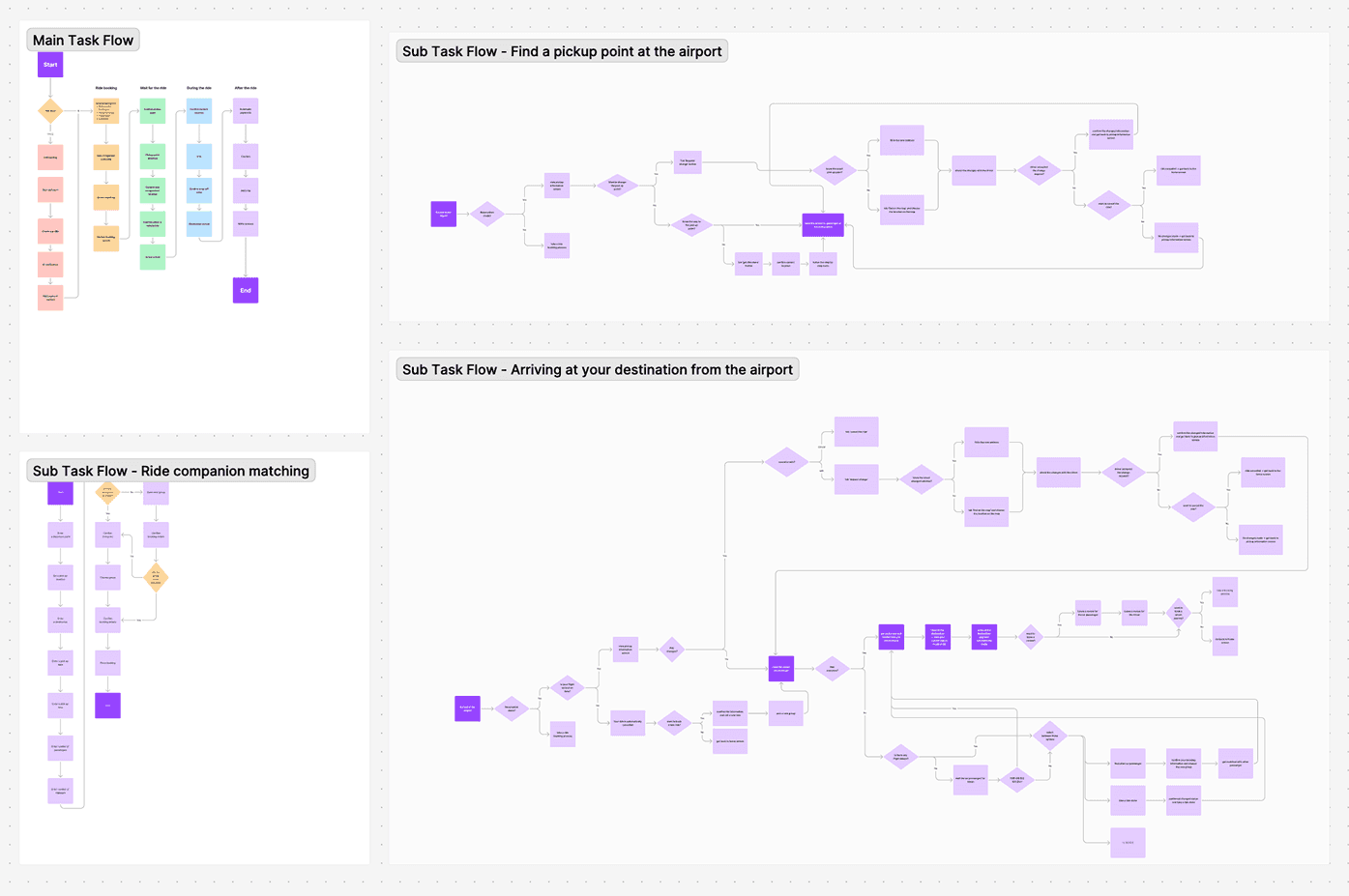
IA & Taskflows
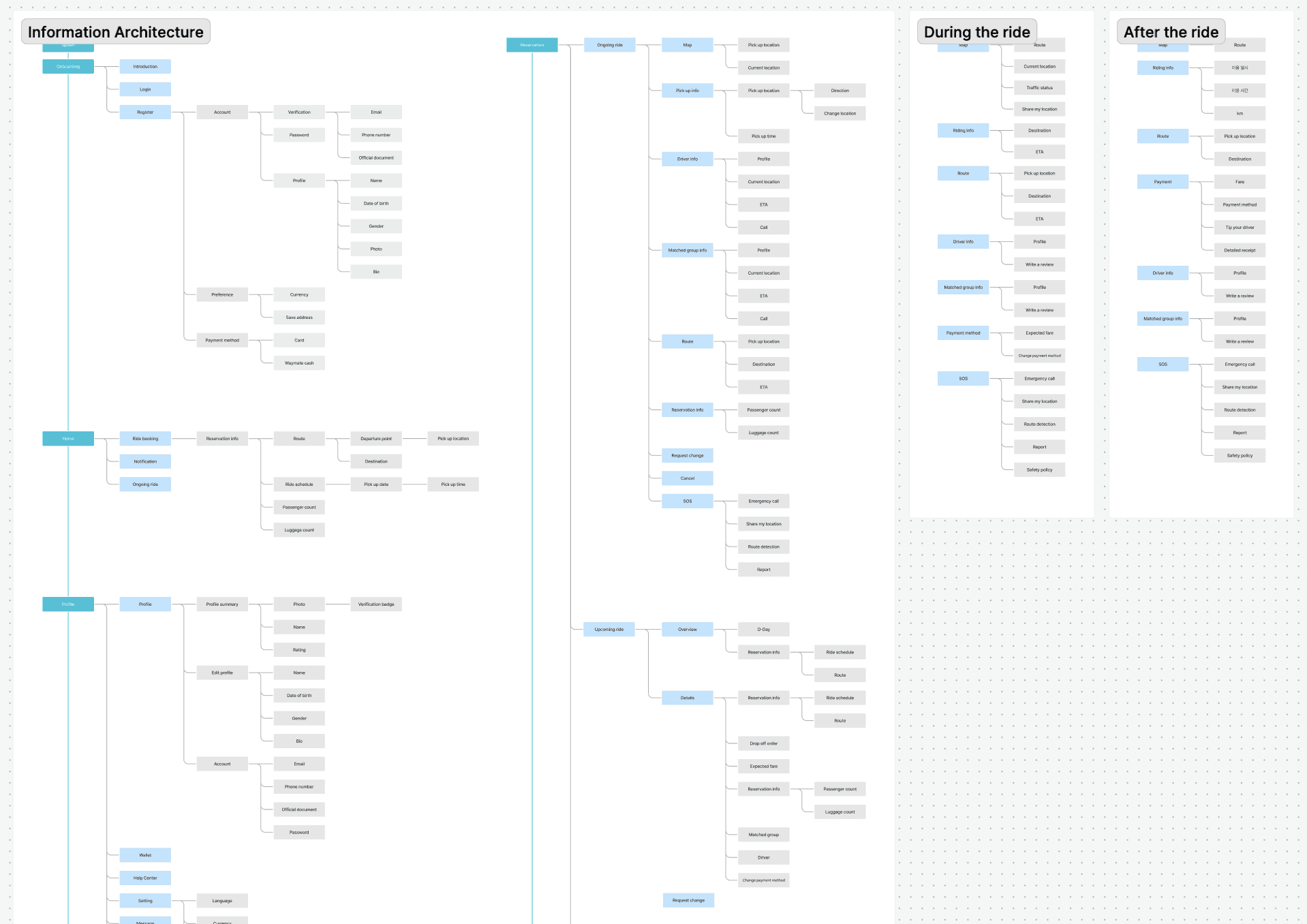
To create a simple and natural flow for ride booking and reaching the destination, we designed both IA and workflow to handle all scenarios seamlessly.
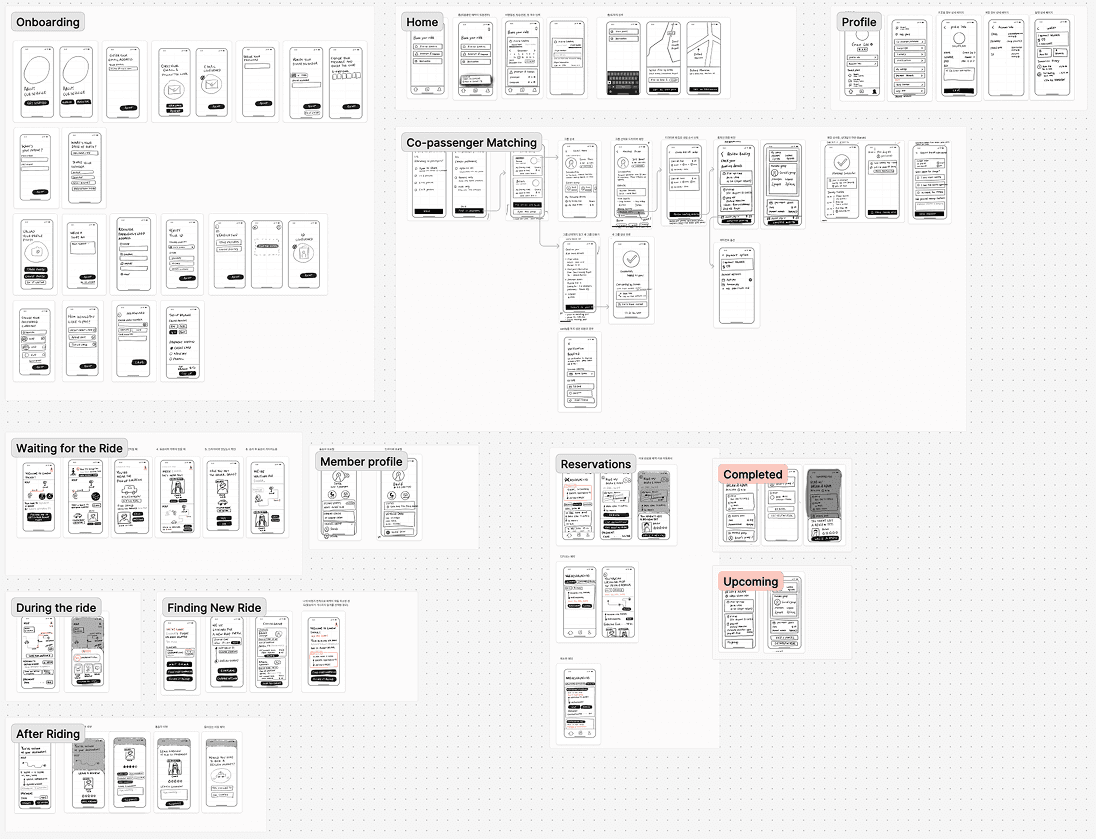
Idea Sketches
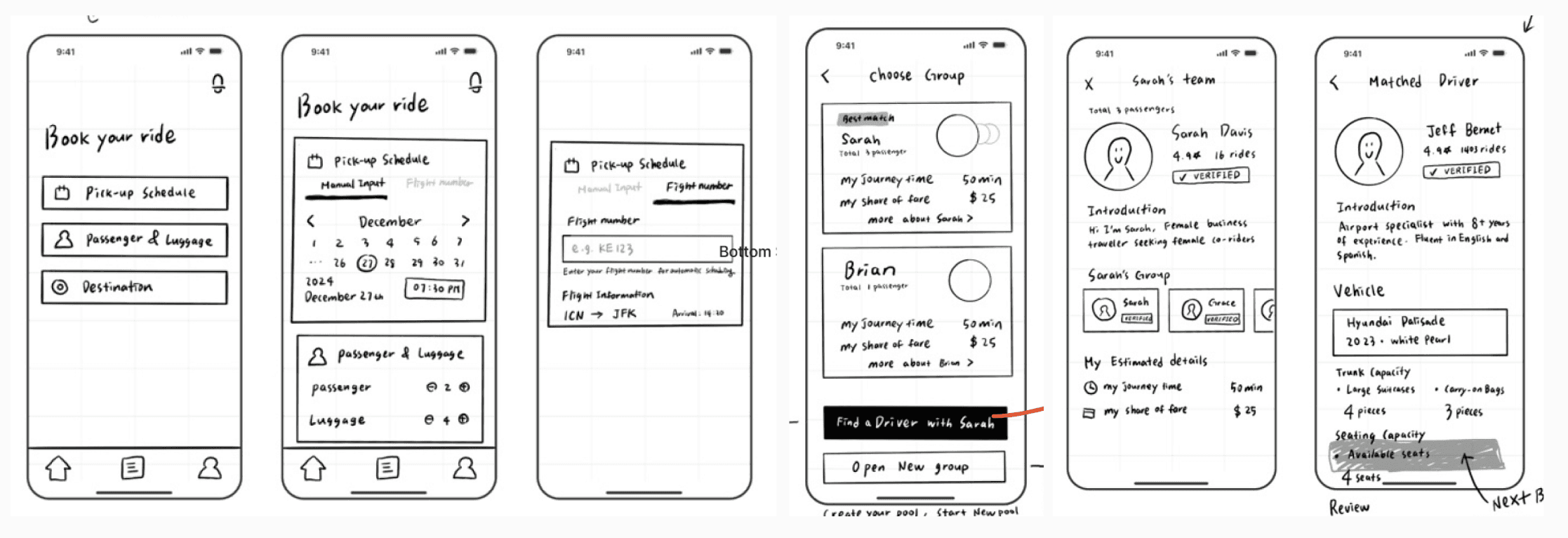
Exploring Concepts through Sketches
We began the design process with rapid, low-fidelity sketches to explore different ideas and user flows. Sketching allowed us to quickly test variations, identify key interactions, and align on the core structure of the experience before moving forward.

Deliver
How should the service be communicated to ensure clarity and reassurance for travellers?
Final Designs
Bringing the Vision to Life: Final Design Implementation
Onboarding
Safe Travel Starts Here
Travelers often feel anxious when meeting unverified drivers or passengers in an unfamiliar international airport. Waymate’s onboarding verifies email, phone, and ID to build a trusted network and ensure safer shared rides.


Ride Booking
Plan your Stress-Free Transit
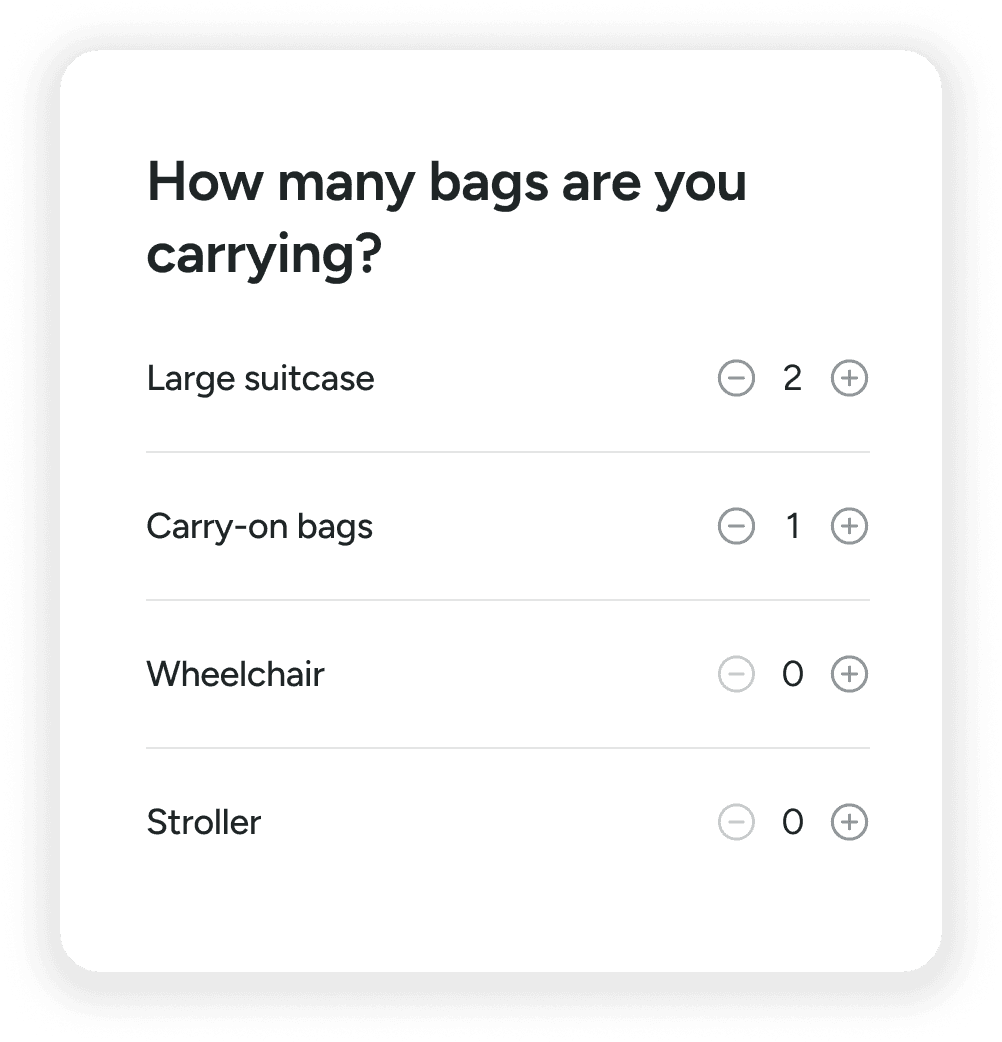
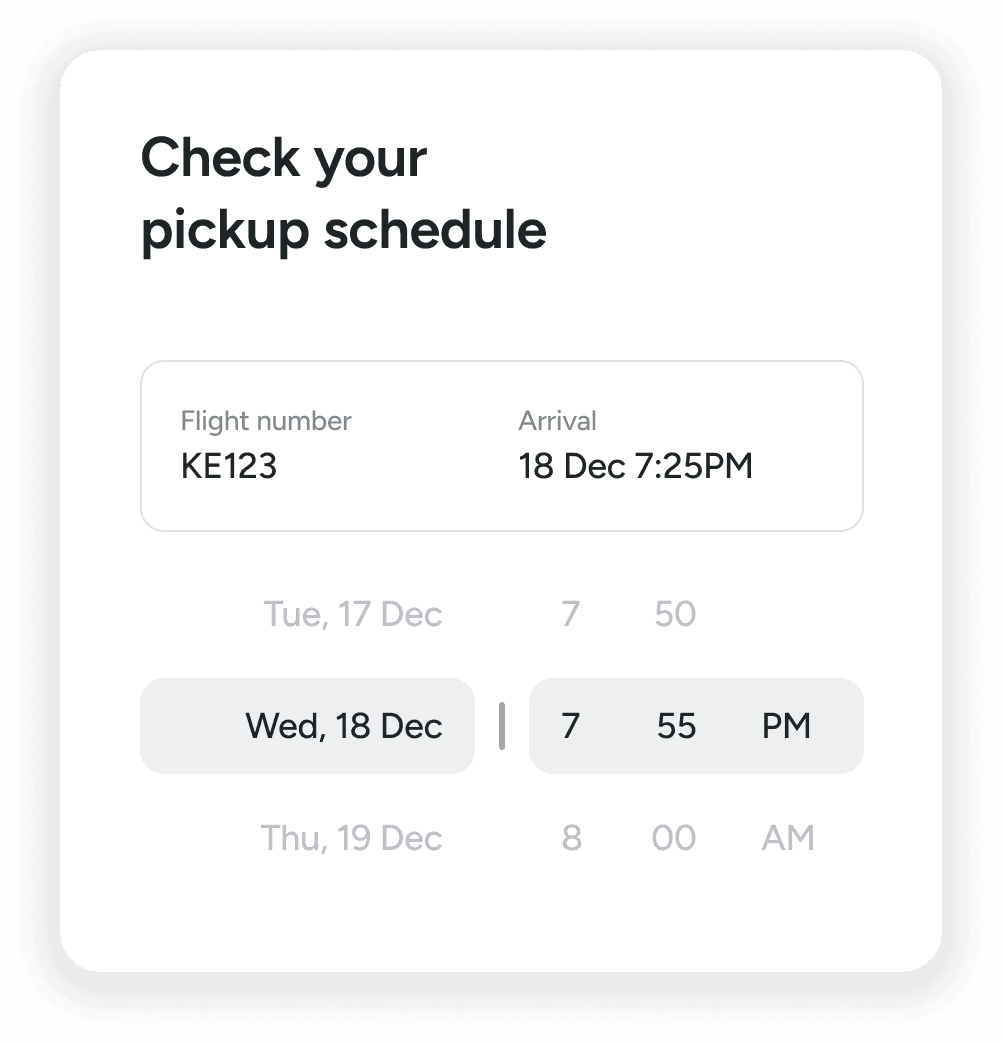
Waymate lets users pre-book rides with detailed info like pickup points, gate numbers, and luggage needs—reducing airport stress and making travel smoother and more predictable.
Ride Companion Matching
Find your Ride Companion
Waymate helps users find the right ride companion by showing verified profiles and matching based on group needs, language, and preferences—making shared rides safer and more comfortable.
Waymate's 'Best Match' aids decisions



Match drivers with group needs.
Build a reliable network through ratings.
View companion profiles before joining.
Waiting the Ride
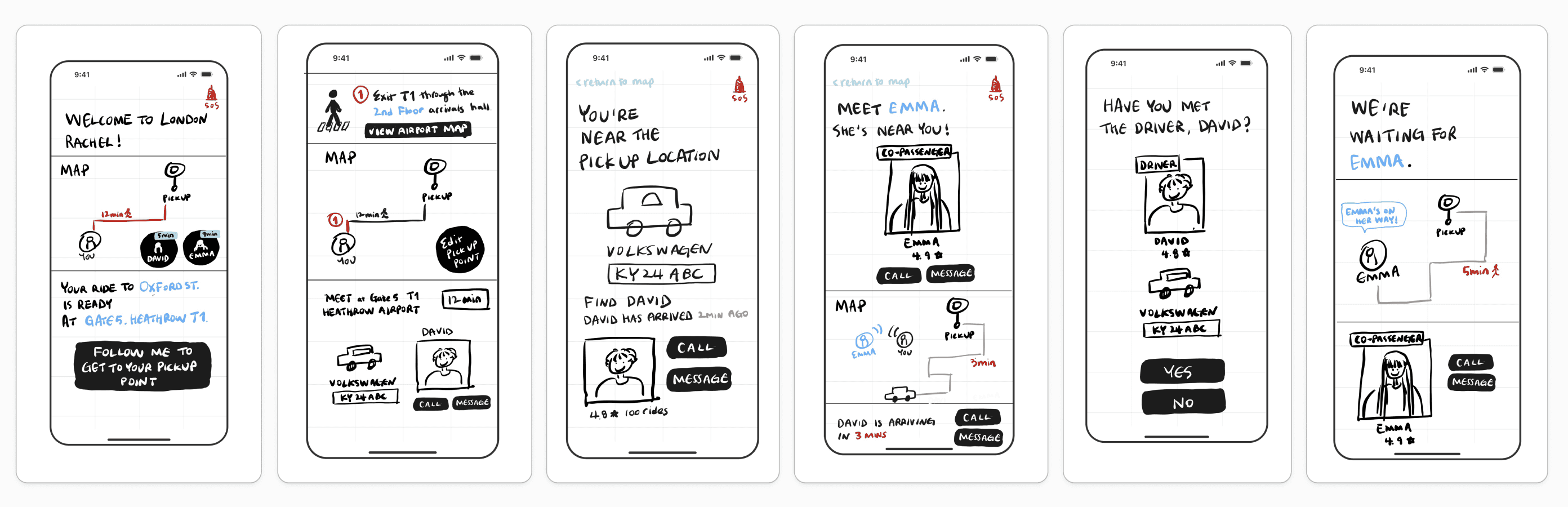
Personalised Guidance for
Seamless Pickups
Real-time updates show the driver and ride companion locations, making pickup easier and reducing the need to communicate directly—especially helpful in unfamiliar languages or settings.
Post-Ride Management
Post-Ride Insights and Management
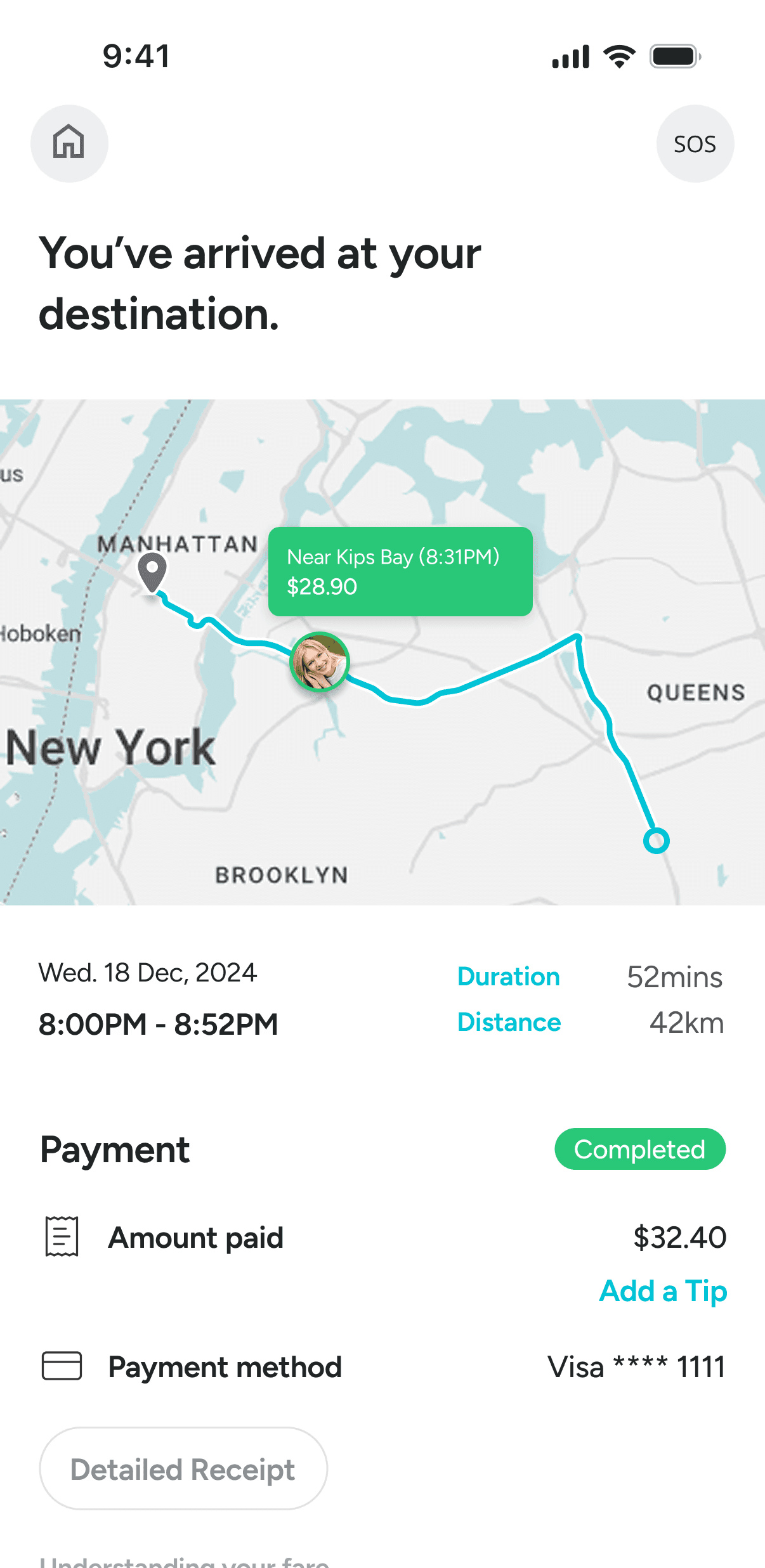
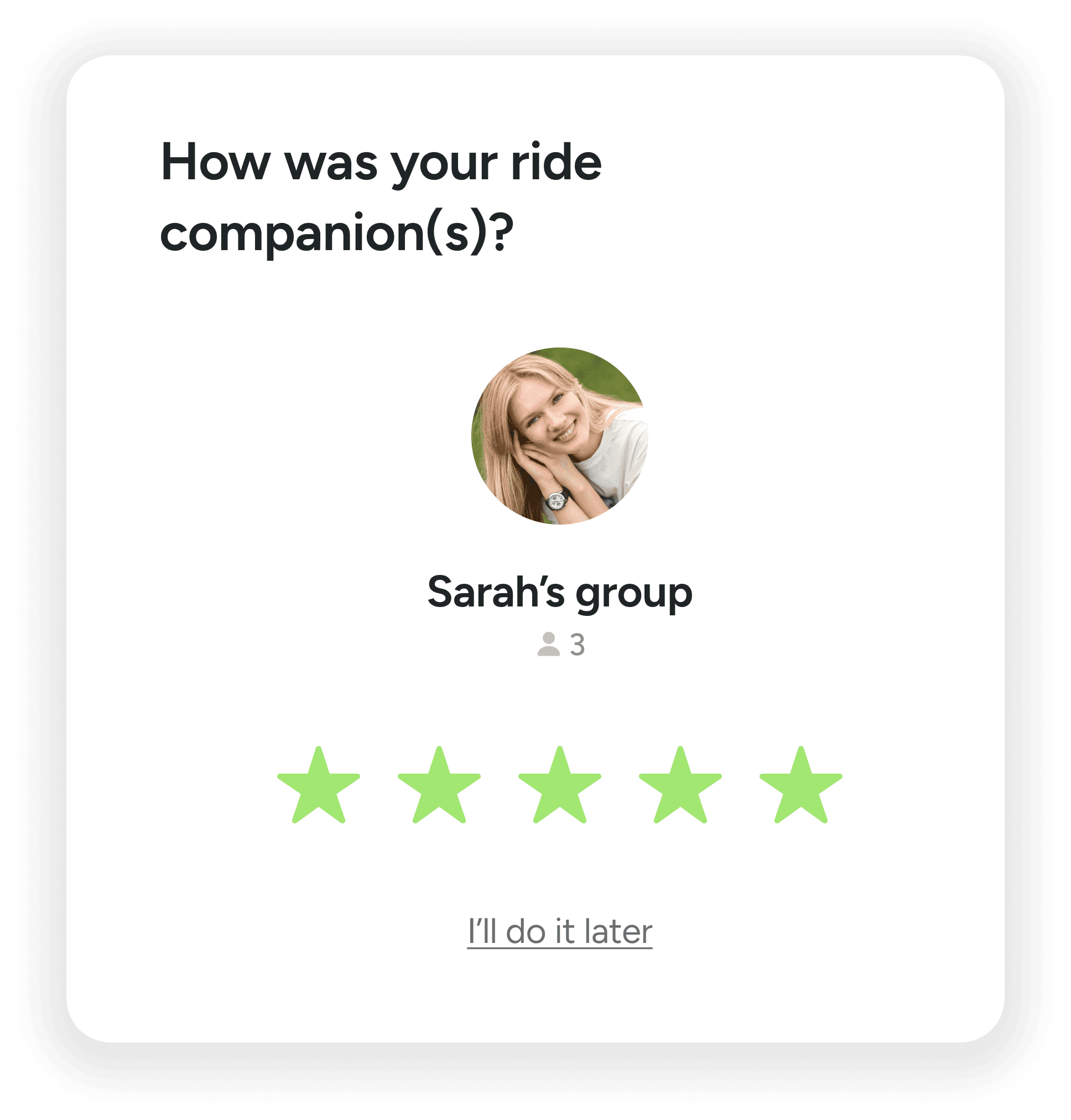
Users can see a full trip summary with route, fare, and ride companion details. They can easily access receipts, add a tip, or leave ratings and reviews—making it simple to manage everything after the ride.

Requesting Changes
Flight-Synced Booking: Stress-Free Travel Even with Schedule Changes
Waymate connects with users' flight information to update pickup time and location automatically. If a flight is delayed, it assigns a new ride group based on the updated arrival time—making schedule changes stress-free.
Heuristic Evaluation
Usability Test
Usability Test
We conducted a usability test with 6 users, covering 10 tasks across the full user journey—from onboarding to post-ride. This helped us identify key friction points and evaluate the overall service flow. A heuristic evaluation was also performed to assess usability against best practices. Together, these insights guided our design improvements for a smoother, more intuitive ride-sharing experience.
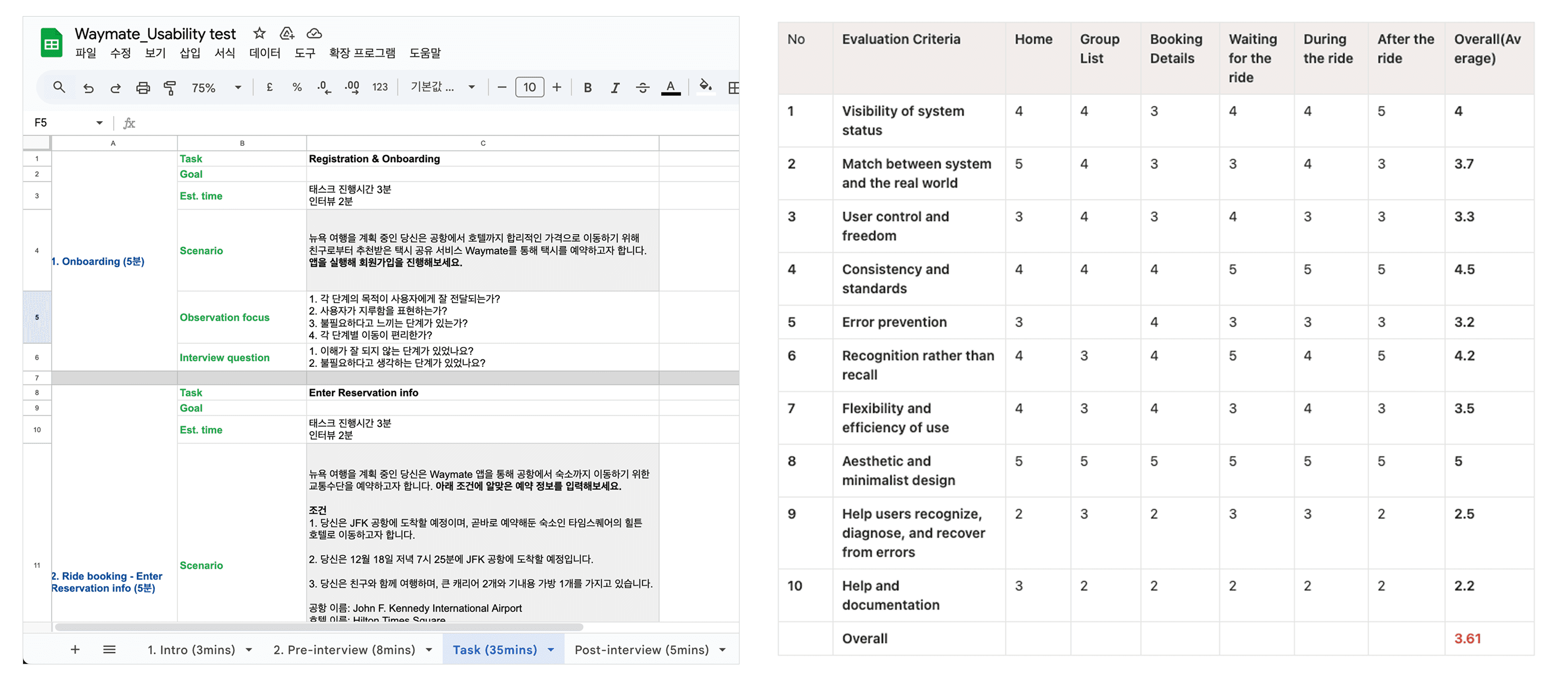
Usability Test Plan
Usability Test (Online via Zoom)
Reflections
What I Learned
Through this project, I gained valuable key insights into creating a seamless experience, from booking to arrival, while optimising the design for ease of use and practicality.
01
Designing Across Touchpoints
I learned to design holistically across touchpoints—booking, finding the car, being on board, and after the ride—by recognising that user needs and decision criteria differ at each stage.
02
Data-Driven Prioritisation
I learned to design and prioritise features using user research data, ensuring that core functions were shaped around user needs rather than assumptions. This helped me develop a user-centred approach to defining essential features.
03
Collaborative Alignment
I learned the importance of staying aligned within a design team. Working with another product designer required us to constantly check alignment before moving forward, and I gained experience using tools like personas, user flows, and function specs to ensure we shared a consistent direction.
Next Project

Product Designer
Katherine Heo
© 2025 katherine HEO.
LONDON, GMT +0