Interactive Dashboard:
SustainInvest
Project Type
solo project
Duration
3 Weeks
My Role
Research | UX Flow Design | prompt engineering | Usability Test
Tools
base 44 (No code application builder)
Project Overview
Bridging the gap between ESG awareness and real investment action
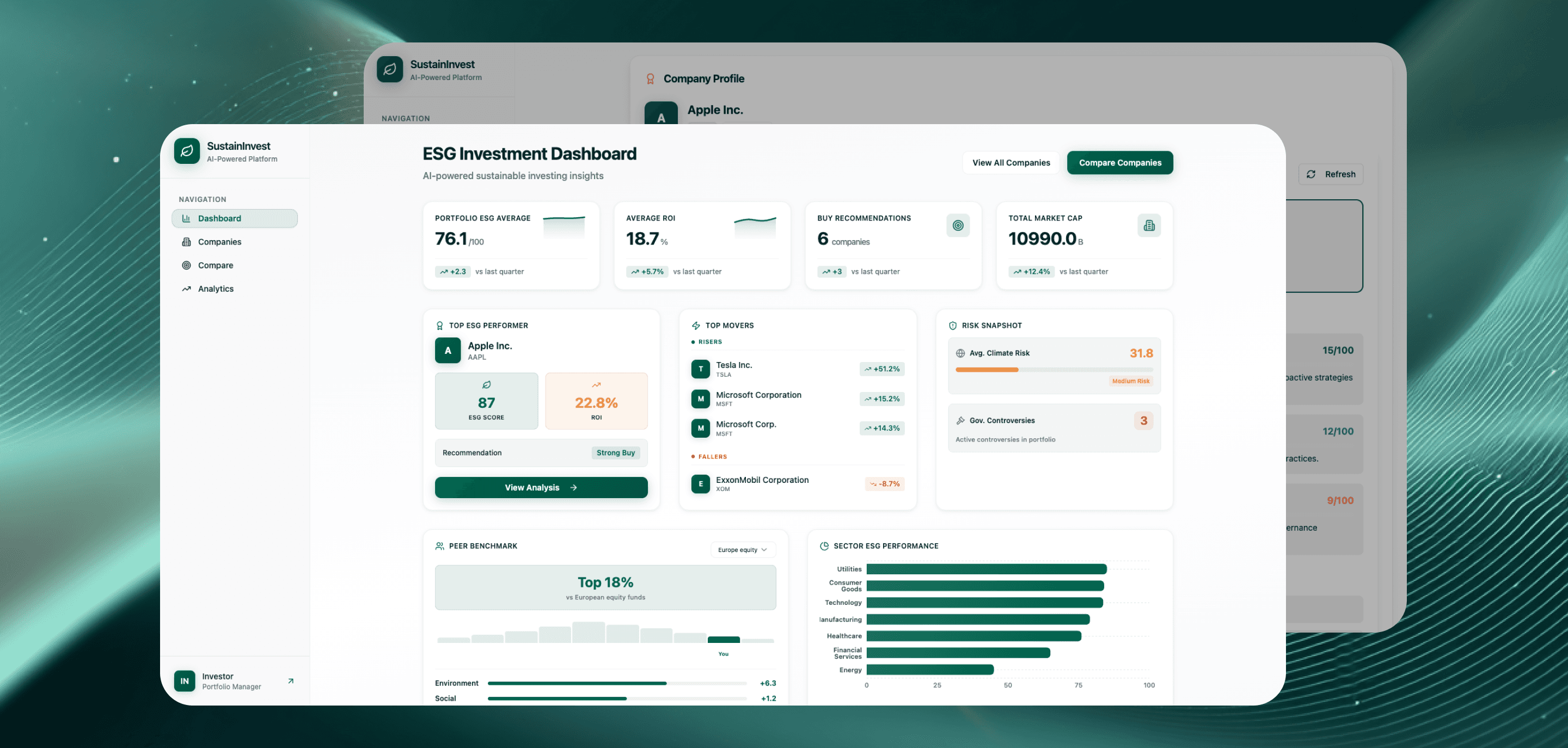
Although investor interest in ESG continues to rise, many still struggle to incorporate that intent into their actual portfolios. This project focuses on closing that gap by designing an interactive ESG Investor Dashboard that turns ESG awareness into clear, practical, and confidence-driven investment decisions.

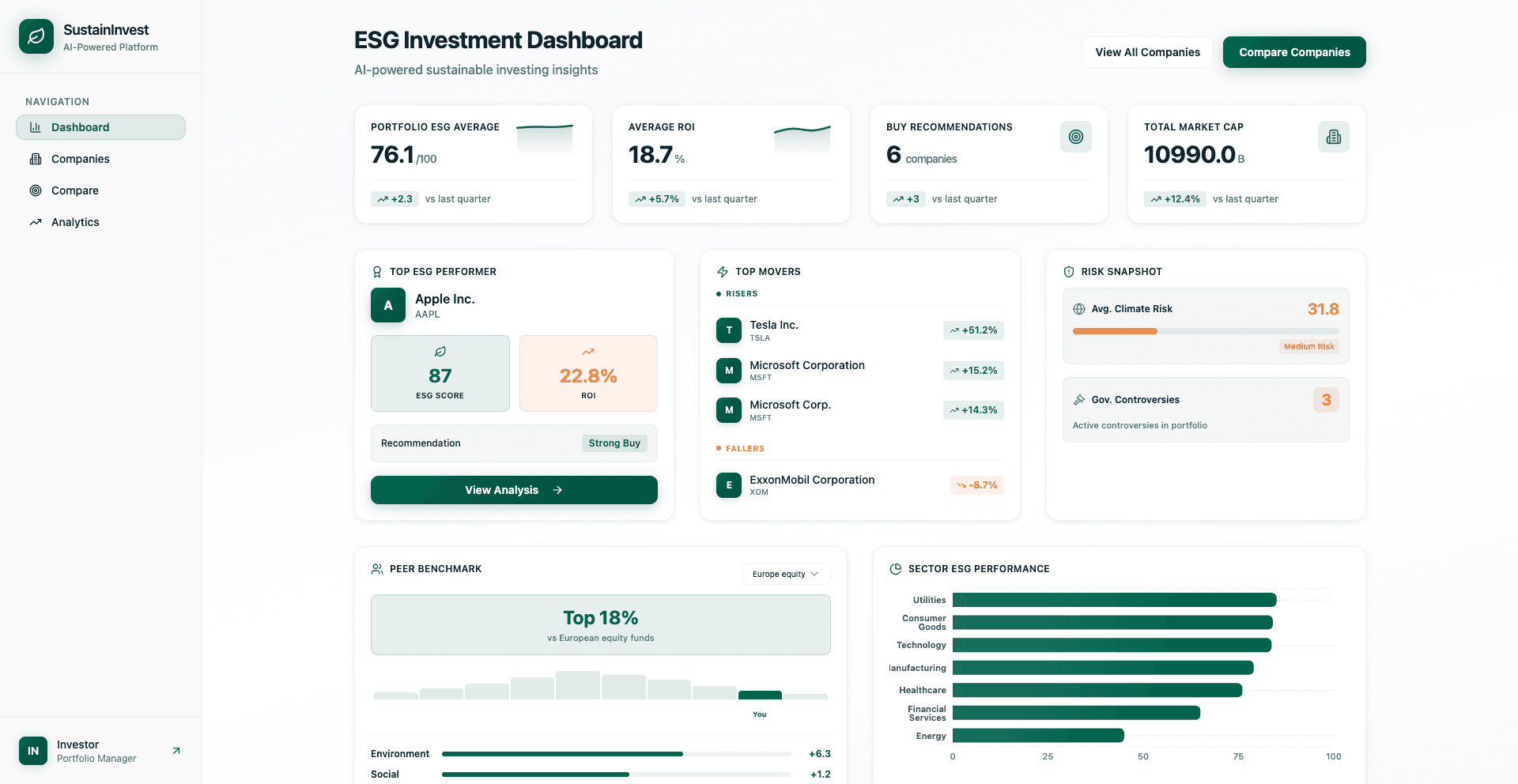
Main Dashboard
Provide an at-a-glance overview of portfolio performance, top movers, and sector-level ESG insights.
AI-Powered
ESG Risk Assessment
AI analyses key ESG signals to generate an instant, transparent risk score for smarter investment decisions.
Company Comparison
Support direct comparison of multiple companies across ESG and financial metrics.
Performance Analytics
Reveal trends and positioning over time. Provides narrative-driven understanding of how a company’s ESG and financial performance evolves relative to its peers.
Insight 01
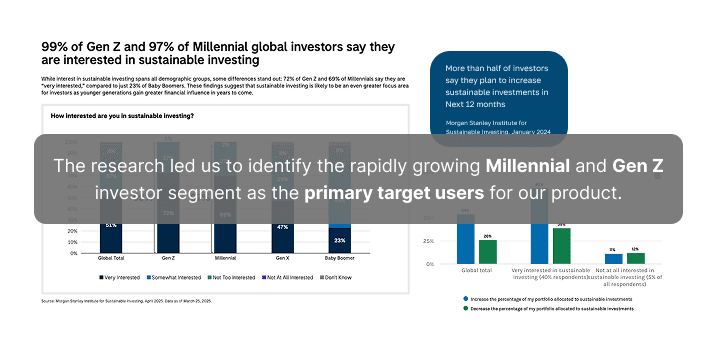
Strong interest in sustainable investing, particularly among young investors
Studies show that ESG interest is especially high among younger generations. Morgan Stanley (2025) reports that 99% of Gen Z and 97% of Millennials are interested in sustainable investing, with over 80% planning to increase their allocations. These findings reveal strong future potential within younger investors as the emerging drivers of ESG investing.
Insight 02
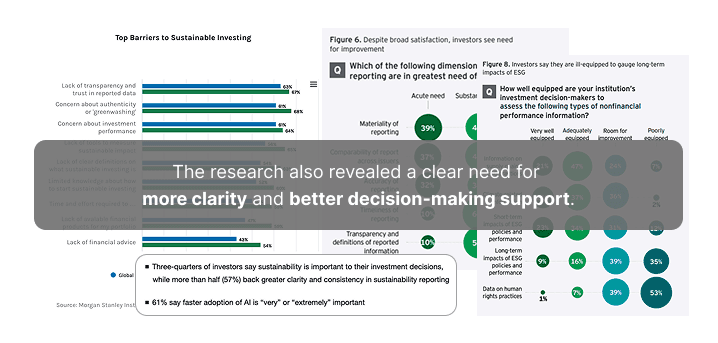
ESG information is too fragmented and hard to understand.
Even with rising interest in sustainable investing, investors struggle to act because ESG data is scattered, inconsistent, and difficult to compare. Unclear definitions and conflicting ratings prevent them from forming confident, well-informed decisions.
Secondary Research
Sustainable investing interest remains strong, especially among younger investors
The secondary research, drawing on reports from EY, Morgan Stanley, and McKinsey, helped identify our target users and clarify their core need for clearer, more actionable support for ESG investing.
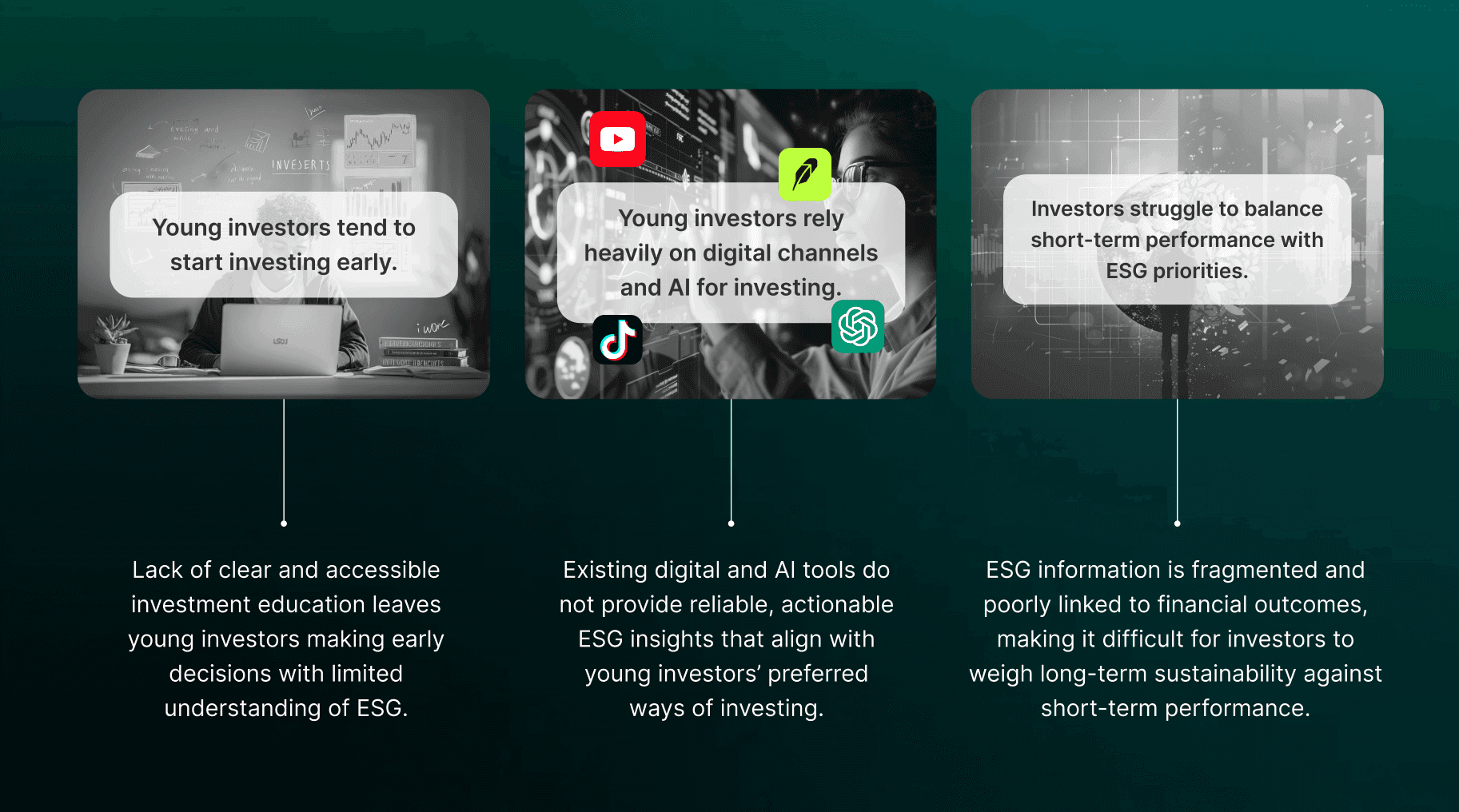
What do young investors struggle with in ESG investing?
To better understand the challenges our target users face, we conducted additional research focused specifically on young investors.
Empathy Map & User Persona
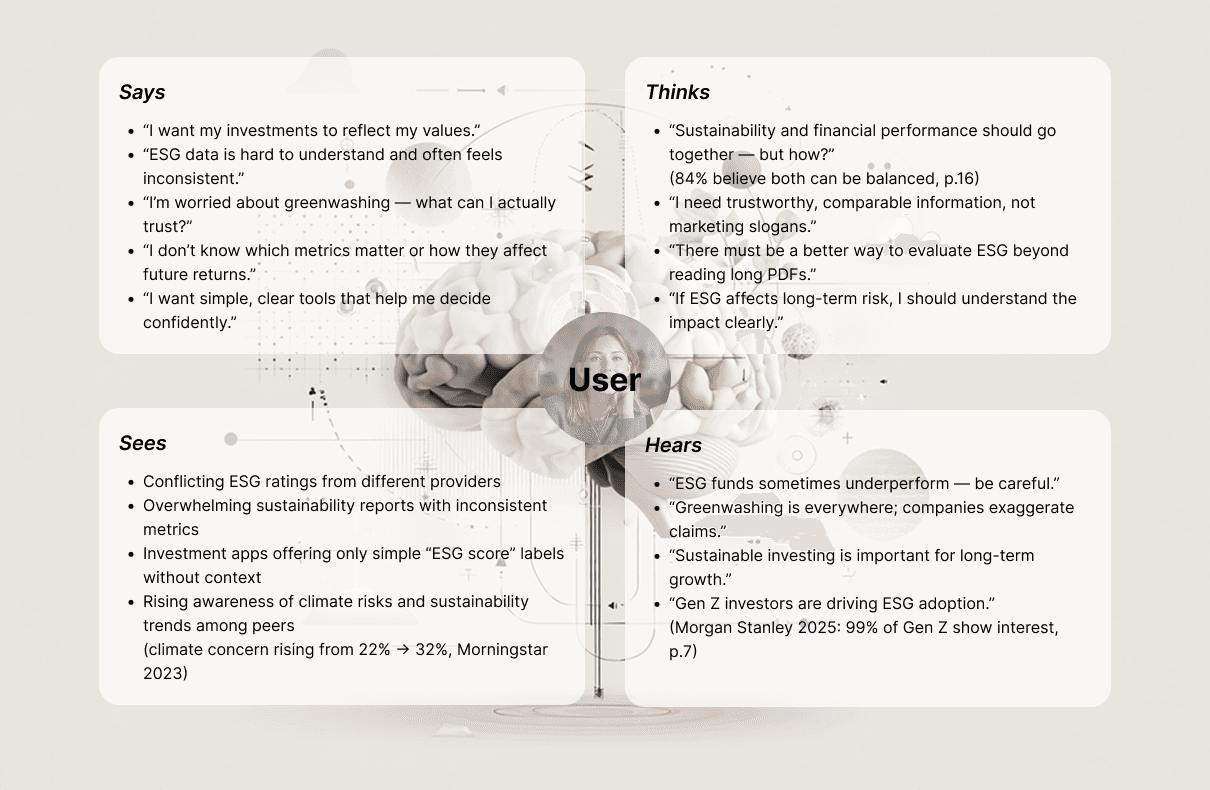
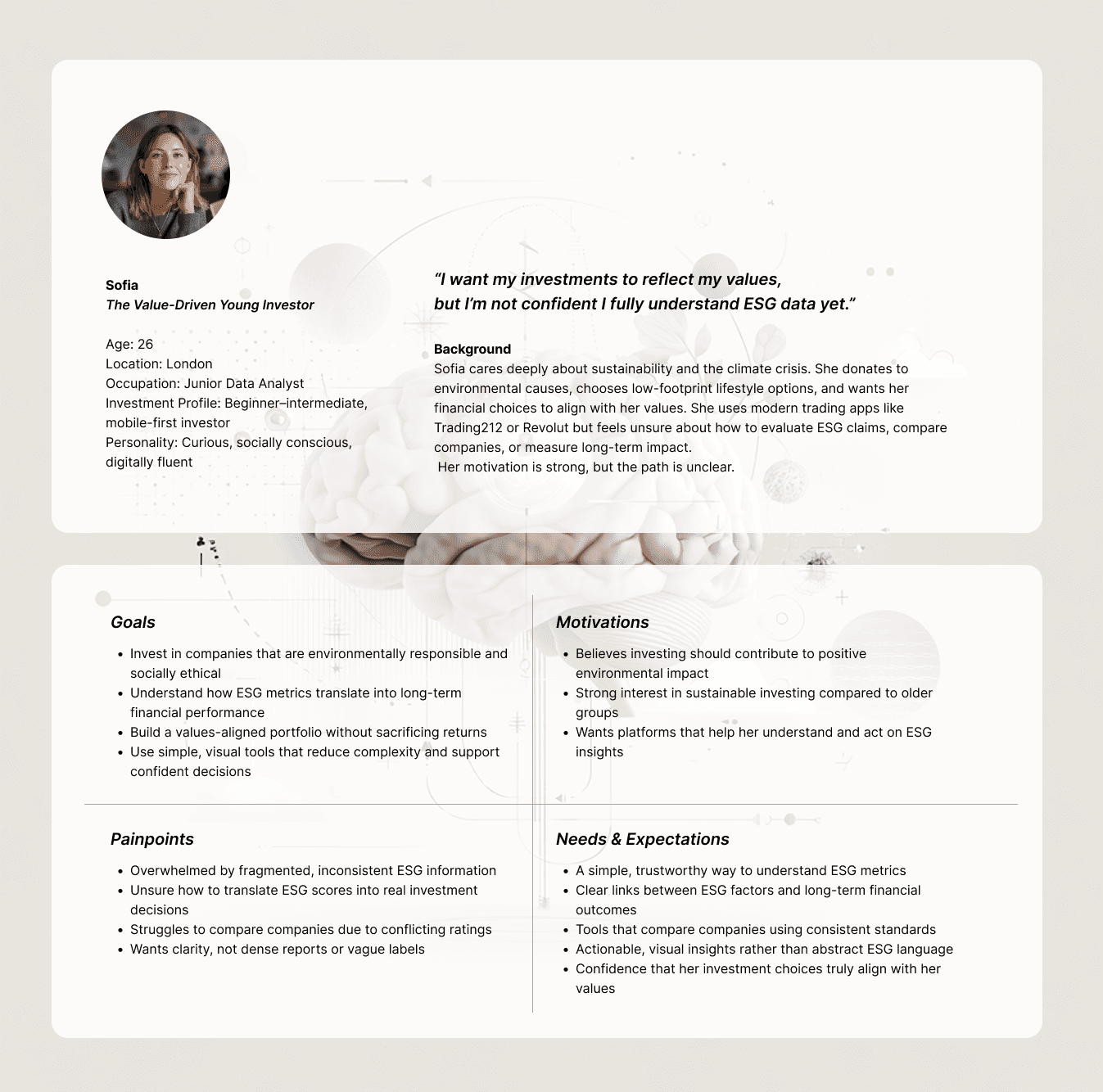
Young, values-driven investors want sustainable investing but lack clear, usable ESG guidance.
Secondary research helped us identify young Gen Z investors as our primary user group. To better understand their investment behaviours, patterns, and mindset from a user-centred perspective, we created a user persona and empathy map to uncover their motivations, pain points, and key needs.
Problem Definition
There is a clear say–do gap in ESG investing among young investors.
Investors increasingly recognise the importance of ESG, yet their intentions rarely translate into actual portfolio decisions, creating a persistent say–do gap that limits meaningful sustainable investing.
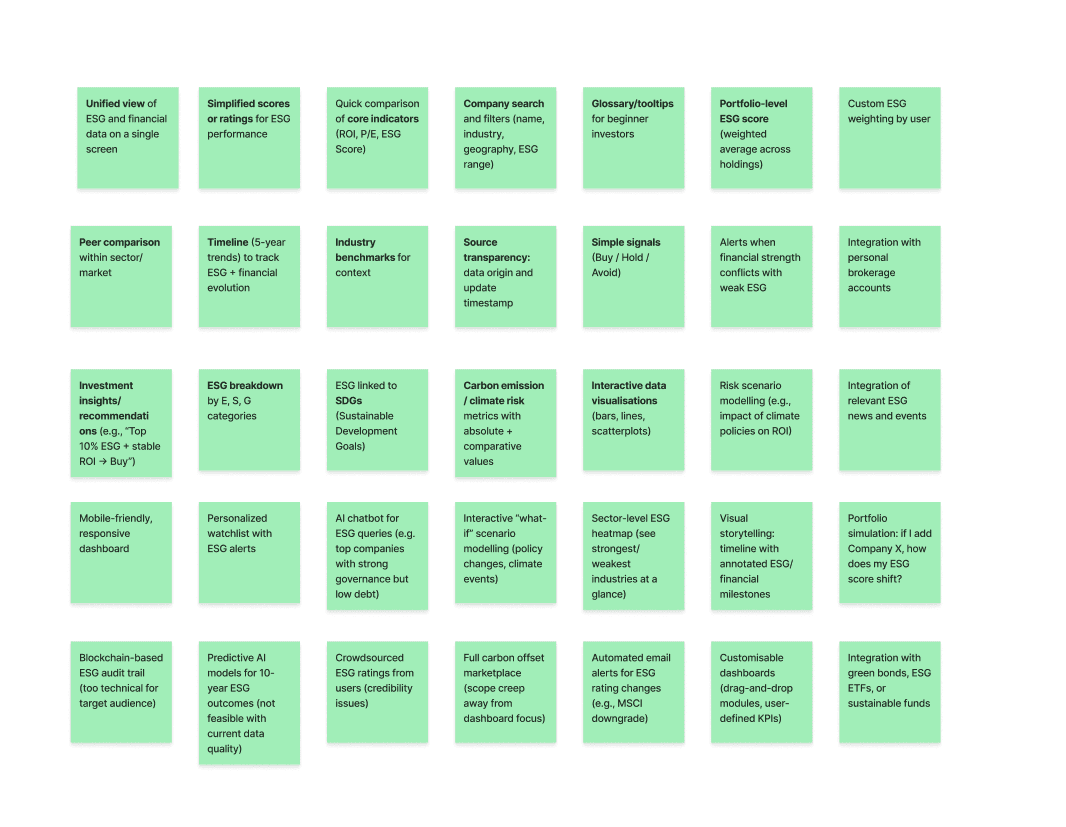
Ideation: HMW Questions
How might we help young investors turn ESG intention into action?
Using HMW questions, we explored how an ESG dashboard could open new possibilities for reducing the say–do gap in young investors’ behaviour.

Hypothesis
An interactive dashboard powered by
AI recommendations can help reduce the say–do gap for young investors.
Protoype Development
Building an Interactive Dashboard Using AI Tools
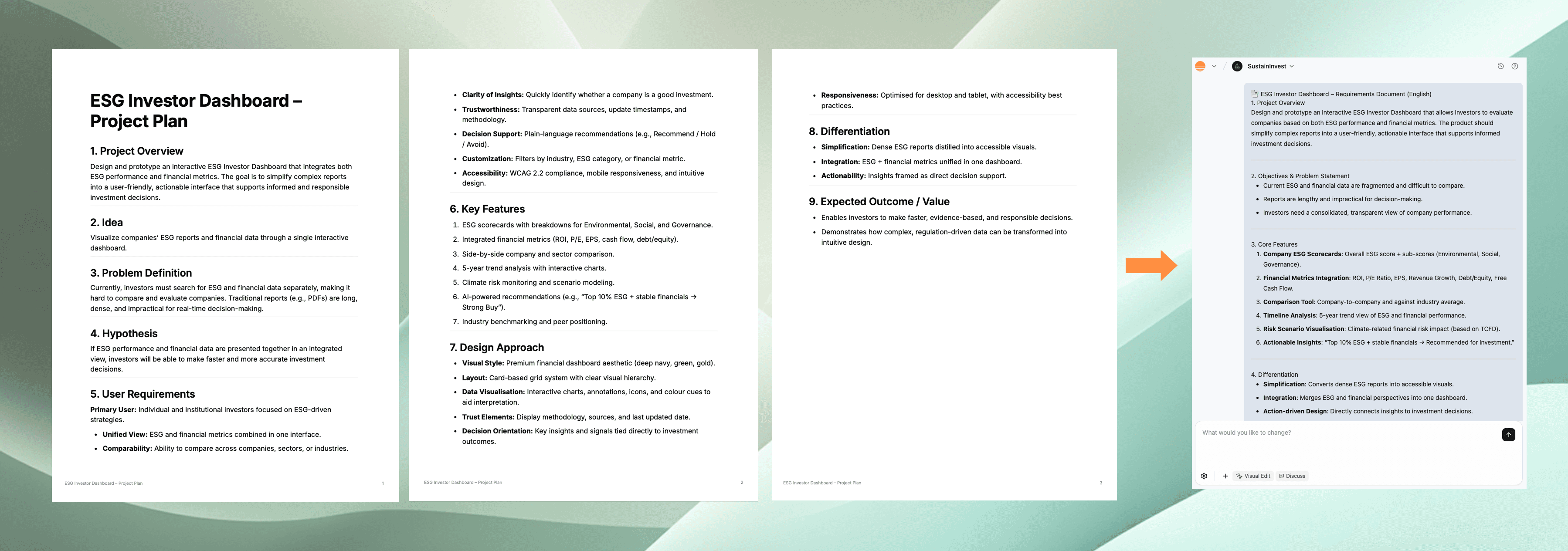
To validate the hypothesis, I created an interactive prototype using AI-assisted design workflows. I translated the product requirements and feature specifications into a structured planning document and generated the first prototype through Base44, an AI-driven product design tool.
Iteration
Refining the Dashboard Through Iterative Prompting
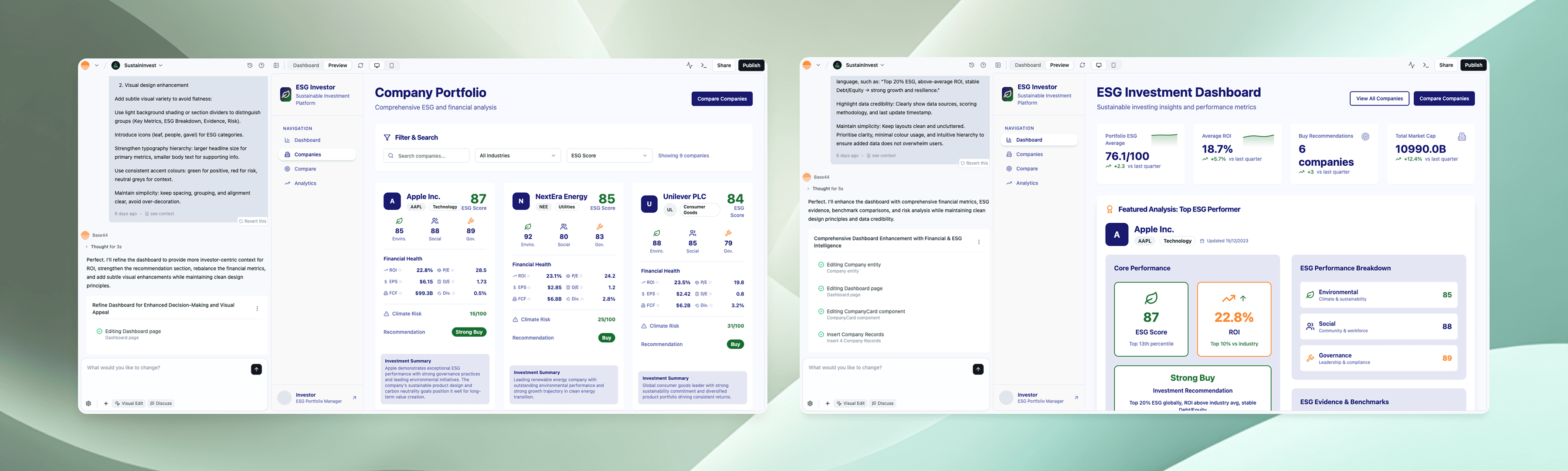
Through repeated prompt refinement, I progressively improved the dashboard by prioritising a clearer data hierarchy and stronger information clarity. Each iteration focused on selecting only the insights that truly matter to users, supporting their decision-making while reducing cognitive load.


User Testing
Validating Design through Usability Testing
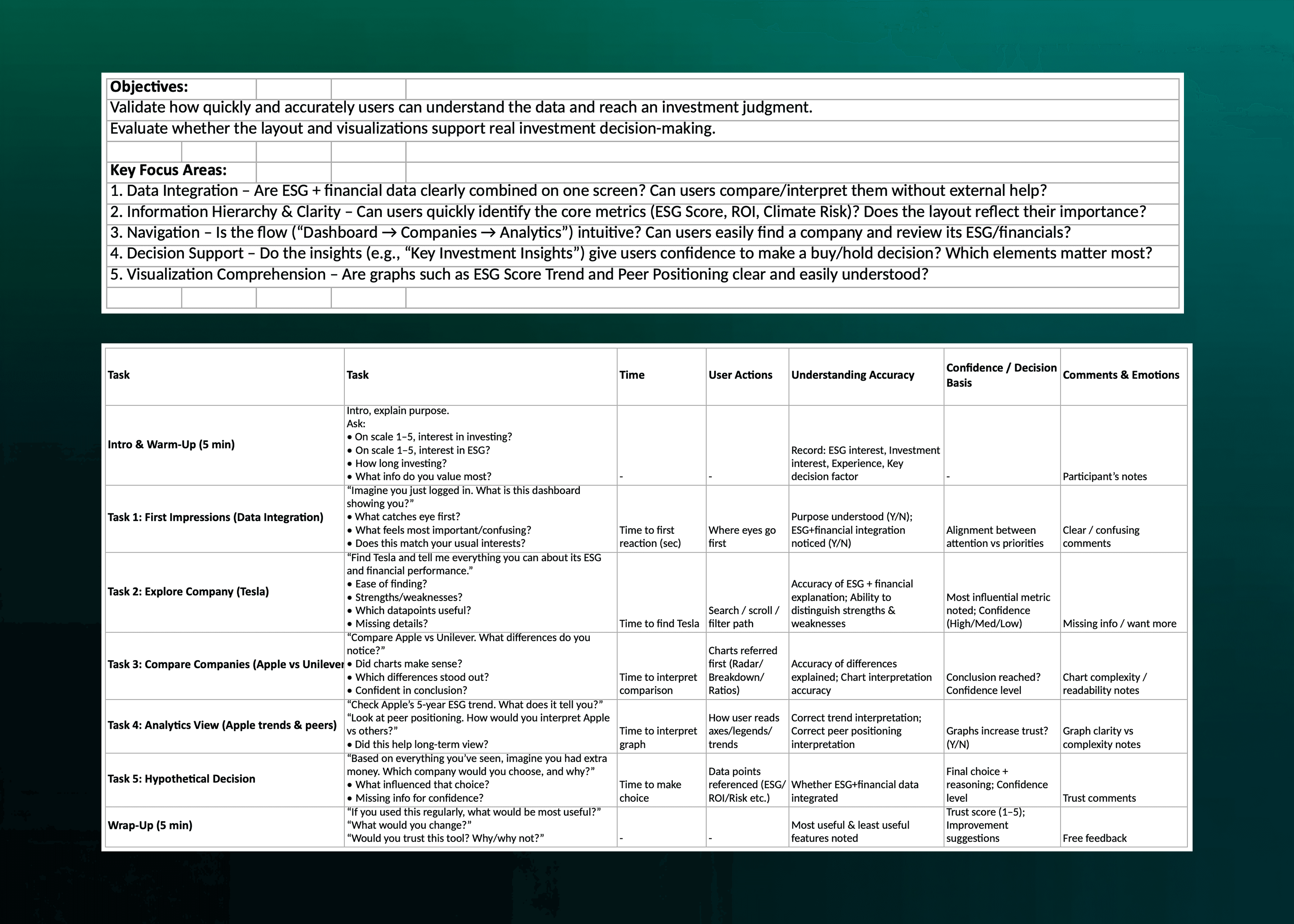
I conducted remote usability testing with two participants interested in investing and ESG. Each session lasted around 30–40 minutes and included five tasks. The focus was on evaluating the visual hierarchy, the clarity of data visualizations, and how effectively the dashboard supported investment decision-making confidence.
Design Iteration
Iterating with User Insights
The design was refined based on issues identified during user testing. User testing revealed that the ESG Top Performer section was overly emphasised, which created confusion about the purpose of the dashboard. The layout was adjusted to provide a clearer, high-level overview, while detailed company information was moved to dedicated pages to ensure better balance and navigation.
Reflections
What I Learned
Redesigning MindDoc deepened my understanding of how design can support emotional well-being. Key takeaways from this project include:
01
Bridging Complexity with Clarity
ESG and financial data are inherently dense and technical. I realised the importance of translating this complexity into accessible, actionable visuals. Designing for clarity meant balancing data richness with intuitive hierarchy and narrative flow.
02
Prompt Engineering as a Design Tool
By iteratively refining prompts in Base44, I learned how precise instructions, structured context, and clear rules can directly influence AI-generated interfaces. This process showed me that prompt engineering is not just about asking, but about designing the language that guides outcomes.
03
Iterative Prototyping with AI
Working with an AI design tool allowed me to test, adjust, and validate design decisions quickly. I discovered that an iterative loop—prompt, output, refine—mirrors traditional design sprints, but with accelerated feedback cycles.
Next Project

Product Designer
Katherine Heo
© 2025 katherine HEO.
LONDON, GMT +0